
Bremerton businesses rely on fire sprinklers to protect people, property, and operations. But even the best system only works as designed when it’s inspected, tested, and maintained on schedule. That’s where a local, NFPA-savvy partner makes the difference. Empire Fire Protection serves Kitsap, Pierce, and King Counties with comprehensive fire sprinkler inspections that keep your facility ready for an emergency and aligned with fire code compliance.
The Basics of Sprinkler Testing
Fire sprinkler inspections and testing are guided by NFPA standards—primarily NFPA 25 (inspection, testing, and maintenance of water-based systems), with design references to NFPA 13 (installation), NFPA 14 (standpipe systems), and NFPA 24 (private fire service mains and hydrants). Local AHJs (fire departments and building officials) typically adopt these standards and enforce them through permits, inspections, and periodic audits.
What does a thorough inspection and test include? While your exact scope is tailored to your building and system type (wet, dry, preaction, deluge), most commercial fire protection programs include:
- Visual inspections of sprinkler heads, piping, hangers, bracing, valves, gauges, signage, and FDCs to identify damage, paint, corrosion, obstructions, or impairments.
- Operational testing such as main drain tests, waterflow and supervisory switch tests, and valve tamper checks to verify alarms and monitoring.
- Dry valve and preaction/deluge trip testing where applicable, ensuring actuation times and water delivery meet NFPA expectations.
- Antifreeze solution verification (where present) and confirmation of proper temperature ratings for devices in colder or semi-exposed spaces.
- Five-year internal pipe inspections for obstruction investigation, as well as gauge replacement or calibration and check of sprinklers subject to age-based testing.
- Standpipe inspection and periodic flow testing per NFPA 14, especially in multi-story or mixed-use buildings.
- Private fire service main and private hydrant inspection/testing per NFPA 24, including hydrant flow tests to confirm water supply and valve operability.
- Coordination of backflow prevention device testing as required by the water purveyor and AHJ, integrating records into your life safety documentation.
- Fire pump testing (if installed), aligning with NFPA 25 procedures for no-flow (churn), partial-flow, and annual full-flow performance checks.
Empire’s inspectors document all findings with photos, gauge readings, and time-stamped results so you have a clear record for the AHJ, your insurer, and internal facility management.
If you want a deeper dive into inspection intervals and deliverables, our overview of the NFPA 25 inspection requirements explains the recurring schedules most owners can expect.
Why It Matters to Bremerton Businesses
- Life safety: Properly tested sprinklers control or suppress fires early, protecting occupants and first responders.
- Business continuity: A reliable system limits fire growth, reducing downtime and costly rebuilds.
- Fire code compliance: Local AHJs expect proof of NFPA-compliant inspections, testing, and maintenance. Missing records or overdue testing can trigger violations or delays in occupancy approvals.
- Insurance requirements: Insurers increasingly review documentation and may challenge claims if systems are impaired or overdue for service.
- Environmental and seasonal realities: Bremerton’s marine environment can accelerate corrosion on exposed or semi-exposed components, while winter freezing risks threaten dry, preaction, and antifreeze systems. Regular inspections catch issues like pinhole leaks, corroded FDC caps, and compromised heat tracing before they turn into emergencies.
Skipping inspections or letting deficiencies linger can be costly. A stuck check valve, painted sprinkler, or obstructed FDC is easy to miss until a fire event exposes the risk. Preventive testing is the most reliable way to make sure your fire sprinkler system will perform when it’s needed most.
What Inspectors Look For—And Fix Fast
Our technicians combine systematic NFPA procedures with practical field experience. Common findings include:
- Painted, loaded, or damaged sprinklers that need replacement to restore correct thermal sensitivity.
- Corroded or leaking fittings, MIC indicators, or compromised pipe hangers requiring repair.
- Closed or partially closed control valves, missing or broken tamper seals, and tagging issues.
- Failure of waterflow or supervisory switches to signal the fire alarm panel or monitoring center.
- Main drain results indicating a change in water supply conditions (e.g., partially closed street valves or supply restrictions).
- Impairments on private hydrants or FDCs—missing caps, damaged threads, blocked access, or signage gaps.
- Temperature control issues in riser rooms and remote areas that could cause freezing in winter.
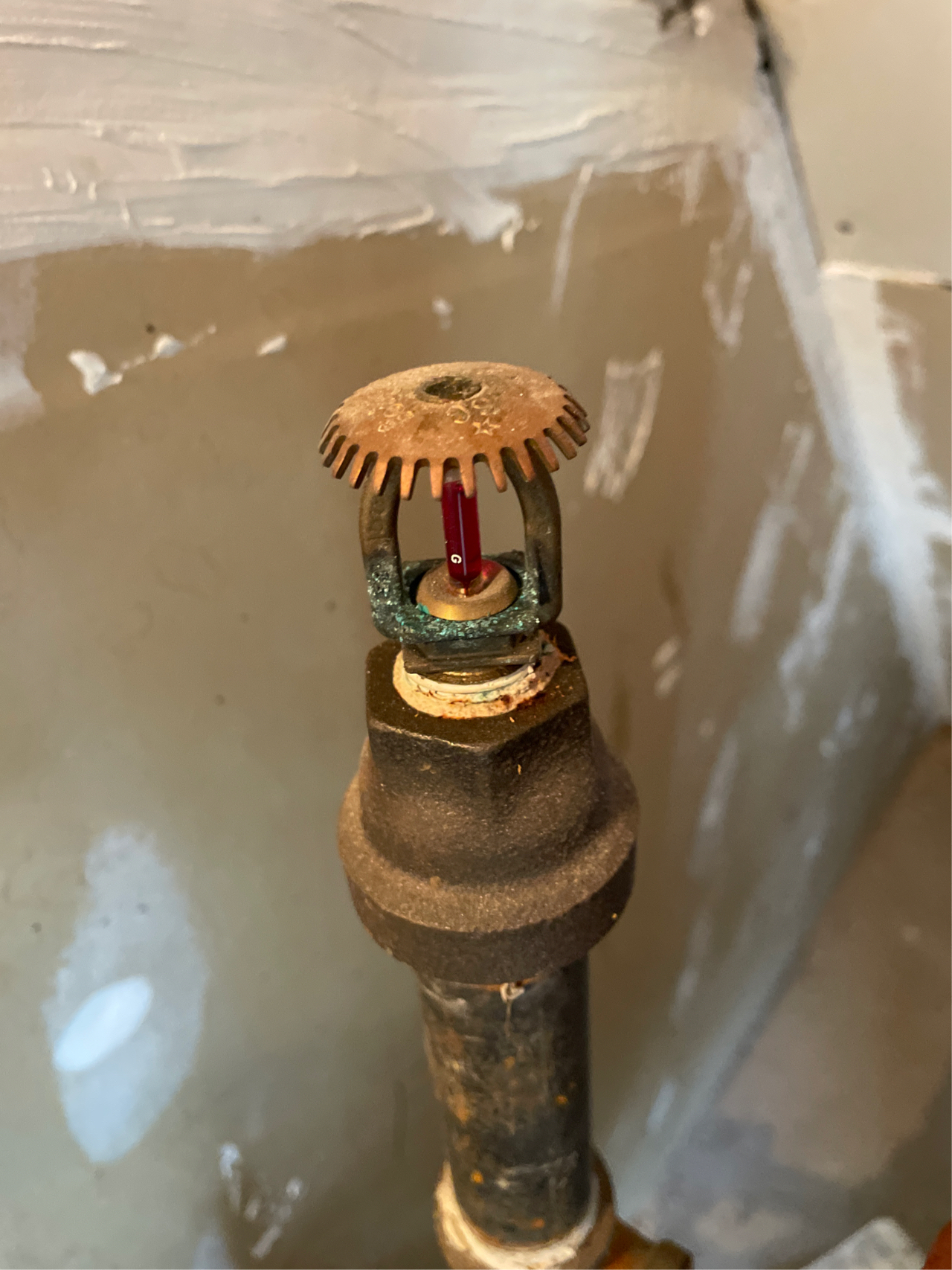
When we find a deficiency, we prioritize clear communication and rapid resolution. You receive a detailed report with recommended corrective actions; if authorized, our repair team can often correct issues during the same visit to minimize disruption.
Professional Installation Matters—even During Inspections
Inspections and testing are only half the story. Systems that are designed and installed correctly are easier to maintain, more redundant, and more resilient. Empire’s in-house designers and union-trained fitters deliver installations aligned with NFPA 13 and modern best practices:
- Preconstruction coordination and 3D modeling to avoid clashes with structure and MEP systems.
- Hazard-appropriate sprinkler selection (temperature ratings, response types, and finishes).
- Proper hangers, bracing, and seismic protection where required.
- Clean, labeled, and accessible riser and valve layouts that speed future inspections.
If your current layout makes maintenance difficult—or you’re planning a tenant improvement—our team can combine inspection insights with smart upgrades to reduce future service costs. Learn more about our dedicated sprinkler testing services and how we integrate testing with maintenance and repair.
The Empire Fire Protection Approach
What makes us different is a culture built around safety, standards, and service:
- NFPA adherence: We align all inspection, testing, and maintenance with NFPA 25, and reference NFPA 13, 14, and 24 where design or system scope is relevant.
- Local AHJ coordination: We understand how regional fire departments interpret code and help you prepare for audits and follow-ups without surprises.
- Union-trained craft: Our installers and service technicians are union-trained and equipped for complex system types, from dry and preaction to combined standpipe/sprinkler systems.
- Clear reporting: Digital reports with photos, device lists, and timestamps streamline compliance and make budgeting for repairs straightforward.
- Lifecycle mindset: From new sprinkler installation to retrofits, testing, and emergency service, we support your system over its entire life.
We serve owners, facility managers, general contractors, and architects across Kitsap, Pierce, and King Counties—helping retail centers, industrial facilities, multifamily, healthcare, and office portfolios maintain fire safety with confidence.
Practical Tips to Stay Inspection-Ready
- Keep access clear: Don’t store materials in front of risers, valves, FDCs, or fire pumps.
- Protect the riser room: Maintain lighting, heat, and signage; repair door hardware for secure access.
- Maintain headroom: Keep 18 inches of clearance beneath sprinklers in non-storage areas.
- Watch the environment: Address leaks, humidity, and temperature swings that accelerate corrosion or freezing.
- Document changes: Notify your fire protection partner when you modify layouts, storage heights, or commodities—these can affect design and sprinkler density.
Get Started With a Local Fire Sprinkler Partner
Whether you manage a waterfront shop in Bremerton or a distribution facility in Kitsap County, Empire Fire Protection is ready to help you maintain NFPA-compliant inspections, testing, and repairs. Call 253-352-3473 or request a quote to schedule your next inspection.
Prefer to review inspection schedules first? Our resource on NFPA 25 inspection requirements breaks down common intervals, and our team can tailor a plan to your system type and occupancy.
When it comes to fire sprinkler reliability, diligence pays off. With Empire’s local expertise, responsive service, and commitment to commercial fire protection best practices, you’ll be inspection-ready year-round—and ready when it counts.