
Introduction
Annual fire sprinkler inspections are designed to keep your people, property, and operations protected. But what happens when an inspector notes a deficiency on your report? Whether it’s a painted sprinkler head, a faulty valve tamper switch, or an impaired dry valve, the path from discovery to resolution matters for fire safety, insurance, and fire code compliance.
At Empire Fire Protection, we help Washington businesses—from Kitsap to Pierce and King Counties—understand what the finding means, what NFPA requires next, and how to get back to full protection with minimal disruption.
From Red Tag to Resolution: What Deficiencies Mean
During an annual inspection or test, your inspector evaluates the system against NFPA 25, the Standard for the Inspection, Testing, and Maintenance of Water-Based Fire Protection Systems. Findings generally fall into a few practical buckets:
- Observations or recommendations: Good to fix for reliability or longevity, but not immediately code-driven.
- Deficiencies: Conditions not in compliance with the standard that could affect performance (e.g., obstructed sprinklers, damaged gauges, missing escutcheons affecting listed spacing or coverage).
- Impairments/critical issues: Conditions that take a system or component out of service or significantly reduce its ability to operate (e.g., closed control valves, inoperative fire pumps, failed alarm transmission). These often trigger immediate action.
While terminology varies by jurisdiction or reporting software, your local AHJ (fire department or building department) will expect a plan to correct deficiencies and to mitigate any impairment right away.
Common deficiency categories you might see
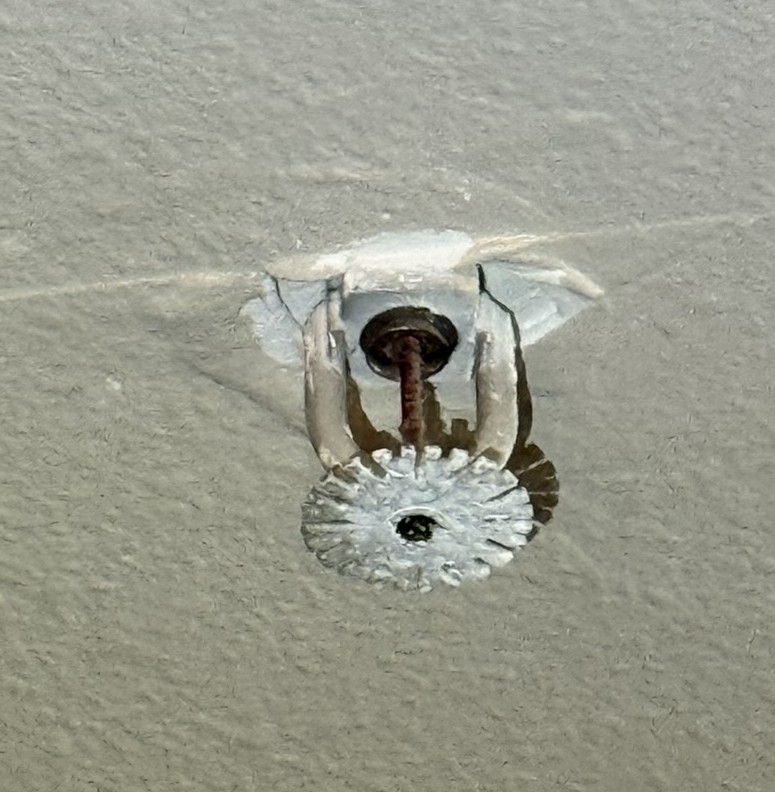
- Sprinkler heads: Painted or corroded sprinklers, incorrect temperature ratings, missing or incompatible cover plates for concealed heads.
- Valves and supervision: Control valves not fully open, tamper switches not signaling, OS&Y stems seized, valve chains/tags missing.
- Water supplies: Main drain results out of tolerance, backflow prevention device issues, weak hydrant or private main performance affecting NFPA 24 requirements.
- Alarm and monitoring: Waterflow switches not activating within the required timeframe, trouble signals not reaching the panel or central station.
- System components: Air compressors for dry systems underperforming, relief valves stuck, gauge calibration issues, corroded or damaged hangers and seismic bracing.
- Coverage and design changes: New racking, tenant improvements, or use changes that require re-evaluation under NFPA 13; building alterations that affect standpipes (NFPA 14) or the private fire main (NFPA 24).
What happens next—your step-by-step path
- Documentation: You’ll receive an inspection report with identified items. Keep this document; AHJs often request proof of corrective action.
- Mitigation: If there’s an impairment, implement interim measures (such as fire watch) per your impairment plan until the system or component is restored.
- Scope and pricing: Your contractor proposes corrective work. Some items are quick fixes; others may require parts, design review, or coordination if the building layout has changed.
- Repair or modification: Work is performed by qualified sprinkler fitters. If the issue involves system design or coverage, corrections follow NFPA 13 (installation standard). If standpipes or underground supply are involved, relevant portions of NFPA 14 and NFPA 24 apply.
- Testing and verification: After repair, required testing is completed (e.g., trip test for a dry valve, waterflow time test, main drain test, pump churn/flow as applicable). Results are documented.
- Close-out: You receive the updated report. If your AHJ requires it, documentation is submitted to confirm corrections and restore compliance.
For a deeper dive on the cadence and scope of inspections and tests, see our resource on NFPA 25 inspection requirements.
Why It Matters
Deficiencies are about more than a punch list—they’re about ensuring your system performs when you need it.
- Life safety and business continuity: A closed valve or obstructed sprinkler can be the difference between a contained incident and a catastrophic loss.
- Fire code compliance: AHJs can issue notices, fines, or restrict occupancy when deficiencies linger. Prompt corrections demonstrate good stewardship and cooperation.
- Insurance and liability: Insurers increasingly ask for inspection reports. Unresolved issues can complicate claims or premiums.
- Budget control: Minor items fixed early prevent larger failures later. Addressing corrosion, testing anomalies, or design gaps proactively is often more cost-effective than emergency work.
In Washington’s dynamic commercial markets—industrial, multi-family, healthcare, and tech—changes to storage height, use, or layout are common. That’s why tying your inspection program to proactive design review under NFPA 13 and the associated standards is smart risk management.
The Empire Fire Protection Approach
Empire Fire Protection is a full-service commercial fire protection partner. Our process is built around NFPA compliance, field expertise, and responsive customer service.
- Trained professionals: Our technicians are union-trained sprinkler fitters and NICET-certified inspectors who understand the nuances of NFPA 25 in the field and how it intersects with NFPA 13, 14, and 24.
- Clear reporting and communication: We prioritize plain-language reports and practical options, outlining what must be fixed now versus what can be scheduled.
- Fast, code-compliant repairs: We stock common parts and coordinate quickly with property managers and GCs to minimize downtime. When design changes are needed, our team evaluates the space against NFPA 13 to confirm density, spacing, obstruction rules, and special hazard needs.
- Integrated testing: From waterflow and main drain to valve trip tests and pump testing, our team handles the verification and documentation AHJs expect. Learn more about testing and inspections services.
- Project scalability: Whether a simple head replacement or a larger modification triggered by tenant improvements, we pair professional sprinkler installation methods with careful sequencing to keep your site safe and productive.
Want a refresher on how yearly inspections fit into your program? Check out our overview on annual fire sprinkler testing and inspections for scheduling tips, documentation best practices, and owner responsibilities.
When inspections uncover design gaps
Annual inspections sometimes reveal that the building’s use or configuration has outpaced the original design. Examples include:
- New high-piled storage or rack configurations that exceed the system’s listed design criteria
- Added mezzanines or equipment that obstruct sprinkler discharge patterns
- Remodels that change hazard classifications or require standpipe extensions
In these cases, NFPA 13 and, if applicable, NFPA 14 guide the upgrade. We’ll evaluate demand and supply, review K-factor and temperature ratings, confirm spacing and obstruction rules, and coordinate any needed adjustments to the private fire main governed by NFPA 24. When corrections move beyond maintenance and into modifications, we approach them like any other project—submittals, permitting support, prefabrication when appropriate, and documented acceptance testing.
What You Can Do Today to Prepare
- Keep your impairment plan current and ensure staff know how to implement a fire watch if needed.
- Verify valves are accessible and supervised; review weekly/monthly owner checks recommended by NFPA 25.
- Document operational changes early—especially storage height, new equipment, or tenant improvements—so design updates happen before annual inspection season.
- Schedule testing with enough lead time for follow-up work, and budget for common corrective items.
For owners and facility managers new to NFPA 25, our quick guide, Fire Sprinkler Inspections: NFPA 25 for Businesses, is a helpful primer on what to expect and how to plan.
Get Started With a Local Fire Sprinkler Partner
If your latest report lists deficiencies—or you want a second opinion—Empire Fire Protection is ready to help. We bring practical, code-driven solutions to commercial fire protection across the Seattle–Bellevue–Tacoma area and beyond.
- Call 253-352-3473 to speak with a local expert
- Email or schedule service through our contact page
- Plan your next inspection or repair visit and get back to full fire safety fast
Deficiencies happen. The difference is how quickly and professionally they’re resolved. With Empire’s NFPA-focused process, union-trained field teams, and customer-first communication, you’ll close the loop with confidence and keep your building protected.